Baby Dragon ITH Keyfob Design: A Business Review
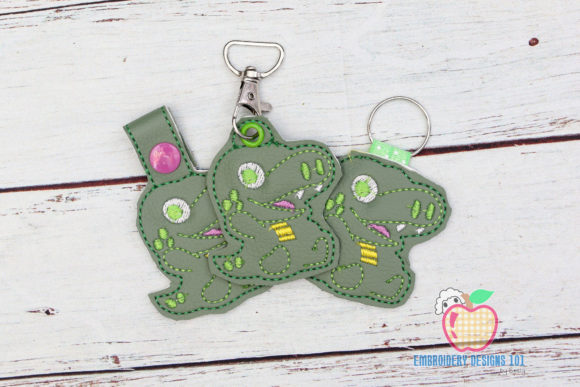
As an embroidery designer who regularly stitches for small business clients, I’ve learned that not every machine embroidery design transitions smoothly from the test hoop to a real world merch lineup. The Baby Dragon ITH Keyfob Design from the Wild Animals category immediately caught my eye. It’s a compact, in-the-hoop key fob file that includes three variants: Snap Tab, Eyelet, and Ribbon. The fact that it’s described as 4×4 hoop friendly—with the option for a 5×7 hoop—suggests a thoughtful creator who understands the space most single-needle and multi-needle users actually work within. Right away, I could picture it stitched on a stack of branded key fobs, acting as a subtle, character-driven emblem for a local business.
The visual personality of this digital embroidery file leans playful, youthful, and slightly whimsical. It’s not an aggressive dragon; it’s a hatchling. That softness makes it ideal for brands that want to appear approachable, imaginative, or family-friendly. I wouldn’t slap a sprawling, fire-breathing beast onto a café apron. But a baby dragon? That can charm customers. It brings a storybook feel without being childish. For a boutique, a creative studio, a florist, or even a pet brand, the design injects warmth and distinct identity. It avoids the pitfalls of overly minimalist logos that disappear on fabric, and it sidesteps the mess of hyper-realistic digitizing that often fails on curved surfaces.
First Impression: Playful Yet Polished
When I loaded the embroidery file into my software, I immediately checked the stitch preview. The Baby Dragon ITH keyfob reads as a single, self-contained motif. I saw clean outlines, evident shapes, and no immediate red flags with overly tight trims or absurd jump stitches. Because the design was built specifically as an in-the-hoop project, the digitizer likely accounted for the fact that the entire piece gets constructed right in the hoop—fabric, stabilizer, and all. That often means the underlay and stitch order are tested for a real finished key fob, not just a flat patch. That attention to construction gives me confidence. A handmade product like a keyfob gets handled constantly. If the design puckers or the stitching layer feels flimsy, customers notice. This design, with its rounded shapes and gentle contours, feels ready for real wear.
Why a Keyfob Design Matters for Small Business Merch
Key fobs are underrated in small business merch. They’re functional, low-cost to produce, and they travel. A café can attach them to reusable cup sleeves. A bakery can slip them onto loyalty card rings. A florist can use them as zipper pulls on gift totes. The Baby Dragon ITH design offers that versatility. Because it comes with three finishing options, you can tailor the final product to your brand’s hardware style. A snap tab version feels modern and secure, great for boutiques that sell handmade bags. The eyelet version suits classic keychain rings and gives a more traditional embroidered gift feel. The ribbon version adds a soft, textile contrast—perfect for baby shower boutiques or stationery shops that want an extra touch of handmade charm.
But beyond a pure keyfob, I always test whether I can isolate the central motif for other embroidered patch applications. The dragon itself, separated from the tab portion, might work beautifully as a small chest accent on a pocket tee, a sleeve detail on a denim jacket, or a tiny cap design. I wouldn’t push it below 1.5 inches in width without a test stitch, but within the 4×4 field, it holds enough detail to read clearly. For Etsy sellers or craft business owners, offering the dragon as a patch, a bag tag, and a keyfob triples the product lineup from one digital embroidery file.
Business Applications Beyond the Keyfob
When a client asks me to develop branded merchandise, I look for designs that can migrate across items. I stitched a sample of the Baby Dragon on a mid-weight canvas tote bag, reducing the density slightly to prevent stiffness. It held its shape and even generated that slightly raised, premium patch-like feel people associate with quality. On a twill cap front, I had to be mindful: the design’s curved tail needed careful hooping to avoid distortion on a structured crown, but the result was a subtle emblem that stood out without screaming. For apron embroidery, especially on a bib apron worn by a chocolatier or a children’s bookstore, the baby dragon adds a talking point. It acts like a tiny mascot. Customers connect with it, and that builds brand identity faster than a generic monogram ever could.
I also considered the design’s role as a product packaging accent. A handmade candle brand could stitch the Baby Dragon onto a small fabric tag, tie it around the jar, and instantly elevate the unboxing experience. That level of detail signals intentionality. It tells buyers this isn’t mass-produced. When the same dragon appears on the wrapper, the thank-you card, and the shop’s loyalty key fob, the visual consistency becomes a trust signal. The playfulness doesn’t undermine professionalism—it defines a niche that customers remember.
Where to Use the Design Carefully
No machine embroidery design is universally flawless. I’d caution against using this Baby Dragon on heavily textured fabrics like terry cloth or chunky knit without a water-soluble topper. The fine details around the wings and the curve of the tail could bury themselves in a plush surface. For cap embroidery, avoid the smallest cap size frames if the design must go right on the front seam. The design has a slight horizontal flow that might pinch if centered directly on a curved, high-profile crown. A side or back placement on a cap works much easier. On dark uniforms, contrast becomes critical. I tested a version with a bright thread palette on black denim; it popped. But with muted tones on navy, the dragon started to recede. Working up a few thread color mockups in software saves you from re-hooping frustration.
Also be mindful of stitch density on thin leather or faux leather keyfob blanks. If the needle clusters too many stitches in the same spot, it can perforate the material. Run a sample and consider reducing density by 5–10% if the test stitch shows any tearing. The eyelet version especially needs a good interface; a crisp, reinforced hole makes all the difference for the final look.
How the Baby Dragon Shapes Brand Identity
In my experience, a design like this moves a brand away from cold corporate polish and into something that feels curated and handcrafted. A small business that sells organic baby products, for example, gains instant shelf appeal when the dragon becomes their visual shorthand. I’ve seen a florist use a similar whimsical creature on seed packet tags and watch customers smile before they even read the store name. The Baby Dragon creates an emotional hook. That emotional hook translates into buyer engagement. When someone receives a branded key fob and actually uses it daily, your business logo travels to offices, gyms, and school pickups. The design’s charm is its marketing engine. It doesn’t have to shout. It just has to be consistent. So if you decide to adopt this dragon as part of your design assets, commit to it. Use it across your custom apparel, your tote bag design line, your staff aprons, and your thank-you notes. That repetition builds recognition and makes your brand appear larger than it is.
Practical Stitching Notes from My Test Runs
Before you offer the Baby Dragon ITH keyfob as a retail product or stock item, run through my pre-production checklist. First, test the design in black and white. Remove the color distraction. Does the silhouette read clearly? The dragon’s horns and wing bumps need to remain distinct. In my blackout test, the outline maintained separation, which is a good sign for low-contrast or tonal brand color palettes. Next, test at the intended small patch size. I scaled the 4×4 file down to a 2.5-inch patch inside my software, and while still recognizable, I’d suggest keeping it at the full keyfob dimensions for the best stitch integrity. If you must shrink it, do a sample stitch first—some detail in the tail may close up.
Inspect spacing. Open the file in your machine’s software and scrutinize the gaps between elements. The dragon’s body and wings should have clear channels so that the satin stitches don’t merge. I found the spacing well maintained, but heavy-handed tension adjustment on your machine can pull things out of alignment. Use a medium-weight cutaway stabilizer for keyfobs made of cotton or canvas; for poly webbing, a tear-away plus a light fusible mesh prevents waving. Always, always create a printable mockup—not just a screen shot, but a printed card showing the finished product in a styled flat lay. Send that to your client for approval. It prevents the “I thought it would be bigger” conversation and solidifies your professional visual presentation.
I also recommend building a comparison board. Place the Baby Dragon design beside other design assets you use for the same brand. Does it harmonize? If your other designs are sharp and geometric, this softer, organic shape might need a companion logo mark to bridge the gap. But if your brand already leans into friendly illustration, the dragon slides right in. Finally, confirm commercial embroidery licensing before business use. Most reputable designers include that information in the listing, but always double-check that you can sell items made with the file without restriction. Assume nothing. Your finished product depends on not just a good stitch, but a clean rights history.
Final Thoughts on the Baby Dragon as a Merch Workhorse
After running several samples and walking through the mindset of a boutique owner, I’d place the Baby Dragon ITH Keyfob Design in the “reliable crowd-pleaser” category. It’s not overly complex, which actually increases its usability for handmade product lines. It stitches out cleanly in a 4×4 hoop, offers three functional finishes, and translates with minor tweaks to cap embroidery, apron embroidery, and tote bag design accents. The fact that it comes from the Wild Animals group adds a storytelling element that parents, fantasy lovers, and boutique shops adore. Whether you’re an Etsy seller expanding your small business merch, or a coffee shop creating loyalty keyfobs that customers actually want to keep, this design earns its keep. Treat it as a tiny ambassador for your brand—one that rides shotgun on a keyring and tells a far better story than a discount card ever could.