A Crocodile Design That's Both Bold and Practical
First Impressions: More Than Just a Wild Animal
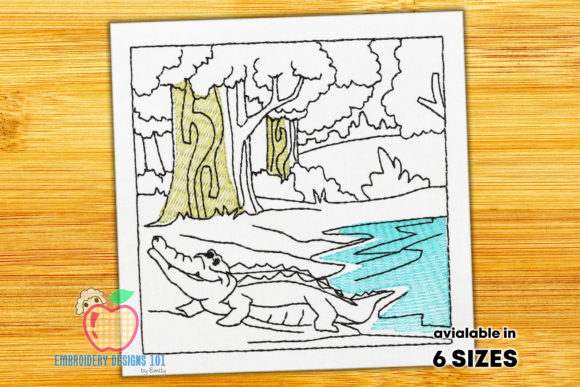
When I first opened Crocodile Crawling on the Riverside, my immediate thought was, "This has character." It’s not a static, scientific illustration; it’s a scene. The crocodile's posture, the suggested waterline, and the overall composition create a little story. The mood is playful yet primal—perfect for projects that need a touch of adventurous personality without being overly aggressive. The detail level is balanced; it's not overly dense, which means it won't become a stitching nightmare, but it has enough definition to be recognizable and engaging from a distance. This isn't a generic clipart transferred to embroidery; it feels like a design conceived for the stitch.
The Perfect Project Match: Where This Design Thrives
In my workshop, I think through designs by imagining them stitched onto actual items. Crocodile Crawling on the Riverside naturally belongs on bold, casual surfaces. I can vividly picture it on the pocket of a sturdy canvas tote bag, the back of a cotton sweatshirt, or as a standout feature on a kid's apron. For a boutique focusing on nursery or adventure-themed decor, it would be a charming addition to a pillow cover or a blanket. The scene-based layout gives it a giftable quality—it feels like a complete little piece of art, making it excellent for personalized gifts like a father-and-son matching cap set or a unique kitchen towel for someone with a quirky sense of humor.
For small business owners and Etsy sellers, this design translates well into popular product categories. It would elevate a simple tea towel into a themed kitchen accessory, turn a plain backpack into a statement piece for a teenager, or create a memorable patch for a denim jacket. Its visual personality is strong enough to carry a product in a mockup or craft fair display, helping it stand out in a sea of more common floral or geometric motifs.
Where Caution is Needed: Fabric and Placement Considerations
While the design appears "fun and easy to stitch," a professional always considers the context. The described "Quick Stitch" nature suggests lower stitch density, which is a positive. However, on very textured fabrics like some burlap or looped towels, the finer running stitch details defining the water or the crocodile's scales might lose clarity. On stretchy fabrics like t-shirts, even with excellent stabilizer, the longer spans of satin stitch (if present in the outline) could be vulnerable to distortion if not properly supported.
Dark fabric backgrounds require careful thread color planning. The design likely uses contrast to define the crocodile from the riverbank. On a black garment, you'd need to ensure the suggested thread colors are light enough to pop, or consider strategic color substitutions. Similarly, on a curved surface like a cap, the design's horizontal orientation needs to be hooped and placed thoughtfully to avoid visual distortion at the crown seams.
As for the smallest included size, one must always inspect the tiny details. If you're planning a tiny version for a baby item, check that the critical features—the crocodile's eye, the shape of its head—remain clear and don’t collapse into a blur of stitches. A test run on scrap fabric is non-negotiable here.
Beyond the Stitch: Impact on Your Product and Business
Using a design like this effectively goes beyond the machine. When stitched well, Crocodile Crawling on the Riverside adds significant visual appeal and perceived value. It tells a customer you’re offering something unique, not just a standard stock image. This builds customer trust and engagement; they see a handmade product with a thoughtful design choice.
For creative entrepreneurs selling digital embroidery files, this design serves as a strong commercial asset. Its clear theme (Wild Animals) and appealing composition make it easy to market in a specific niche. When creating printable mockups for your listings, a design with this level of visual completeness helps potential buyers instantly envision it on a finished product.
Its giftability and recognition are high. It’s a memorable image, making products featuring it more likely to be shared or remembered—a subtle boost for brand consistency if you specialize in nature or adventure-themed goods.
A Designer's Practical Notes Before You Hoop It
Before committing this to a client project or your best-selling tote, here’s my real-world checklist:
- Always test first. Run it on the fabric you intend to use, even if it’s just a scrap. This reveals true stitch density, thread coverage, and any potential hiccups with small elements.
- Consider contrast. Look at the design file in black and white on your screen. This helps you see the form independent of color and plan for light or dark backgrounds.
- Verify the specifics. The product mentions it comes in multiple sizes. Confirm the exact hoop sizes required for your project and ensure your machine can handle the file formats provided. The description notes these are not 100 fille—this likely means they are not completely filled with dense satin stitches, which is good for speed and fabric integrity, but understand the stitch structure.
- Stabilizer is key. Match your stabilizer to the fabric. A "fun and easy" stitch can become a puckered mess on lightweight cotton without proper support.
- Clarify licensing. Before selling any finished items or including this file in a commercial digital product bundle, confirm the licensing terms. Don’t assume; check with the designer or distributor.
Final Judgment: A Versatile Asset for the Right Maker
Crocodile Crawling on the Riverside strikes me as a highly versatile embroidery design with a strong, specific personality. It’s not for every project, but for the ones it fits—casual apparel, themed home goods, personalized gifts, kids' items—it will perform exceptionally well. Its scene-based approach gives it a narrative edge that customers appreciate. Provided you follow the practical steps of testing and preparation, it should translate from digital file to finished product with clarity and impact, supporting both hobbyist joy and small business growth. It’s a design that feels ready to crawl right off the screen and onto something real.