India Gate Lineart Review for Small Business Merch
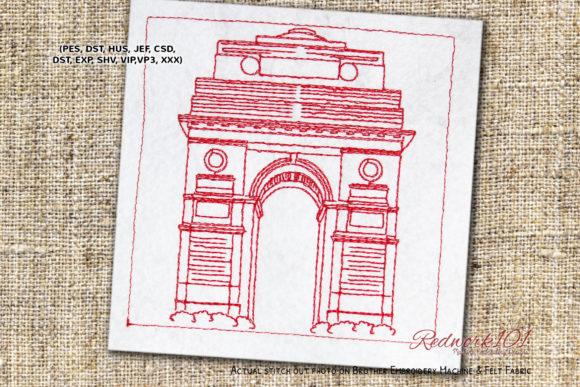
When I first opened the India Gate Lineart file, my immediate thought was how clean and versatile this design feels. The lineart approach strips the monument down to its essential silhouette, which is exactly what you want for a professional embroidery file that needs to work across multiple merchandise types. It is not overly ornamental or cluttered with tiny details that would frustrate a needle. Instead, it reads as structured, dignified, and balanced. The outline-based construction gives it a crisp, modern feel while still carrying the weight of a recognizable landmark. For small business owners, that balance is gold. You get a design that looks intentional and polished without screaming for attention. It is the kind of visual that sits comfortably on a chest pocket, a cap front, or a tote bag corner and quietly elevates the product.
What stood out to me right away is the flexibility hinted at in the product description. The note about the box stitch being optional and the outer box color being adjustable is actually a significant detail for anyone planning to use India Gate Lineart for branded merchandise. That means you are not locked into a rigid frame. You can drop the box entirely for a more open, airy patch layout, or you can keep it and adjust the thread color to match your brand palette. As a designer who has tested hundreds of embroidery files, I can tell you that this kind of optional framing is rare and valuable. It essentially gives you two or three layout variations from a single purchase, which is a smart investment for a small business building out a product line.
First Impression and Visual Personality
The India Gate Lineart design leans into a clean, architectural aesthetic. The lineart style makes it feel structured and precise rather than rustic or hand-drawn. I would place this design squarely in the modern classic category. It is not playful or whimsical, which actually broadens its appeal for businesses that want to project reliability, heritage, or subtle sophistication. Think of a boutique coffee roaster, a specialty tea brand, a craft bakery, or a design studio. The monument silhouette communicates a sense of place and story without being loud. That restraint is what makes the design work so well for commercial embroidery. A bold, overly complex design can overwhelm a garment. India Gate Lineart stays refined.
The optional box frame adds another layer of visual personality. With the box, the design takes on a badge-like quality, which is perfect for embroidered patches, uniform accents, and structured cap embroidery. Without the box, it becomes more organic and can flow into the fabric naturally, which suits apron decoration, tote bag branding, and subtle sleeve details. As a designer, I appreciate when a single embroidery file gives me this much creative control. It means I can pitch the same design to two different clients and present it in completely different ways simply by deciding whether the box stitch stays or goes.
Real Business Use for Embroidered Patches and Branded Merch
Let me walk you through how India Gate Lineart performs in real small business scenarios. The most obvious application is the embroidered patch. The lineart structure lends itself beautifully to patch production because the outlines hold their shape well even when scaled down. A patch version of this design would look excellent on denim jackets, canvas backpacks, work shirts, and baseball caps. For a handmade brand selling on Etsy, offering a limited-edition patch with this design could be a strong add-on product. The monument theme gives it a travel, heritage, or cultural angle that resonates with buyers looking for meaningful accessories.
For staff uniforms and apron embroidery, this design works as a subtle yet distinctive identifier. Picture a small café or a specialty food shop where the team wears aprons with a chest-level embroidered mark. The India Gate Lineart design, stitched in a single thread color on a natural cotton apron, would look professional and understated. It signals attention to detail without being flashy. The same applies to work shirts and polo shirts. Placed on the left chest or a sleeve, the design adds a branded touch that feels cohesive and considered. Restaurant groups, boutique hotels, and retail stores looking for a location-inspired uniform emblem would find this design fitting.
Cap Embroidery and Curved Surface Performance
Cap embroidery is notoriously tricky. Curved surfaces, center seams, and limited flat areas mean your design needs to be thoughtfully composed. The India Gate Lineart file, with its linear structure and optional box, has the right bones for cap use. The key is sizing. A cap front typically accommodates a design around 2 to 2.5 inches tall. If the lineart spacing is too tight or the outlines too delicate, you will lose clarity. Before committing to a full cap run, I would strongly recommend stitching a test sample on a structured cap to evaluate how the lines read on the curve. The optional box can actually help here by framing the design and giving the eye a clear boundary, which is especially useful on textured or dark-colored caps where outlines can blend into the fabric.
Tote Bag and Product Packaging Accents
Tote bags are a favorite canvas for small business branding because they are affordable, reusable, and highly visible. The India Gate Lineart design, stitched in a contrasting thread on a canvas tote, creates a refined, boutique-quality product. I have seen similar lineart embroidery designs used by bookstores, artisan markets, florists, and gift shops to great effect. The design is distinct enough to be recognized but neutral enough to appeal to a wide customer base. For product packaging accents, consider stitching the design onto fabric pouches, drawstring bags, or even as a decorative element on cloth napkins and tea towels. These smaller applications require careful attention to stitch density and stabilizer choice, but the effort pays off in elevated brand presentation.
Where to Use Caution and Test Thoroughly
Every embroidery design has its sensitive zones, and India Gate Lineart is no exception. The linework is the star here, so anything that compromises stitch clarity is a risk. Very small patch sizes are the first concern. If you try to shrink this design down to a one-inch patch, those clean outlines may start to blur or lose definition. I would keep the minimum patch size at around 2 inches wide to preserve legibility. The second caution area is high stitch density combined with fine outlines. If the lineart contains closely spaced parallel lines, the fabric underneath can pucker, especially on lightweight or stretchy materials. A proper cutaway stabilizer and a test run on the actual garment fabric are non-negotiable.
Dark uniforms and textured fabrics also demand extra care. On a black polo shirt, for example, dark thread colors will disappear, and even light threads need sufficient contrast and stitch weight to read clearly. I always advise testing the design in black and white first. If the silhouette is still recognizable in a single high-contrast thread on dark fabric, you know the design has strong bones. The India Gate Lineart passes this test conceptually because its outline-based composition naturally supports high-contrast stitching. The optional box color flexibility mentioned in the description becomes a real advantage here. You can match the box thread to your brand color and choose a contrasting monument thread for maximum visibility.
Frequent Washing and Long-Term Durability
For businesses planning to embroider work uniforms, aprons, or items that will see frequent washing, the durability of the stitched design is a critical consideration. Lineart designs generally hold up well because they rely on defined outlines rather than dense fill areas that can loosen over time. The India Gate Lineart design, assuming reasonable stitch density, should withstand regular laundering without significant distortion. I recommend using polyester thread for items that will be washed often, as it resists fading and shrinkage better than rayon. A soft backing or cover stitch on the reverse side of the embroidery also protects the skin and extends the life of the stitching, which matters for uniforms worn all day.
Brand Identity and Customer Trust Through Embroidery
The choice of an embroidery design for your business merchandise is never just about decoration. It is a brand identity decision. When a customer sees a thoughtfully embroidered patch or a carefully stitched logo on a product, it communicates quality, permanence, and intentionality. The India Gate Lineart design carries architectural weight and cultural recognition, which can lend a sense of heritage and rootedness to a brand. A small business that uses this design on its packaging, staff attire, or customer gifts is telling a story of craftsmanship and place. That builds trust. Buyers associate embroidered details with premium products. A tote bag with a clean embroidered patch feels more valuable than one with a printed logo, and customers are often willing to pay more for that perceived upgrade.
Visual consistency is another pillar of strong branding. If you use India Gate Lineart across multiple products, the design remains consistent whether it appears on a cap, an apron, or a product label. That repetition reinforces brand recognition. I have seen handmade businesses use a single embroidery design across their entire merchandise line, and the cumulative effect on customer perception is powerful. The design becomes a signature. The optional box frame gives you a way to create subtle variations while maintaining that core visual identity, which is a clever way to keep a product line feeling fresh without abandoning brand cohesion.
Practical Embroidery Designer Notes Before Production
Before you load this file onto your machine and start stitching, here are the steps I follow as an embroidery designer to ensure a successful outcome. First, test the design in black and white on scrap fabric. This reveals any spacing issues, awkward overlaps, or areas where the stitch density feels off. Second, check the design at the exact size you plan to use, especially for small patch applications. What looks great at 4 inches may lose clarity at 1.5 inches. Third, review your thread color contrast against the actual garment fabric. A thread that looks perfect on screen may blend into the fabric under real lighting. Fourth, confirm your hoop size can comfortably accommodate the design with enough margin for stabilizer. Tight hooping can distort the fabric and misalign the stitch registration.
Fifth, use the correct stabilizer for the fabric type. Cutaway stabilizer for knits and stretchy fabrics, tear-away for stable wovens, and a water-soluble topper for textured or fluffy fabrics like fleece and towels. Sixth, create a printable mockup of the finished product for client approval if you are stitching for someone else. A mockup sets expectations and prevents costly rework. Seventh, compare the India Gate Lineart design beside your other design assets to ensure visual harmony across your product range. Eighth, confirm commercial licensing terms before using the design on items for sale. The product description does not specify exact license details, so reach out to the seller or platform to clarify that your intended business use is covered. Do not skip this step. It protects your business from legal headaches down the road.
Thread Colors, Fabric Texture, and Stitch Density Considerations
The India Gate Lineart design, being outline-focused, gives you a lot of creative freedom with thread colors. A single-tone metallic gold or copper thread on a dark fabric creates an elegant, premium look that would work beautifully for boutique merchandise and gift items. A matte cotton thread in a neutral tone suits organic, handmade brand aesthetics. The key is to let the thread choice align with your brand personality. Fabric texture also plays a major role in how the final stitch looks. Smooth cotton twill, canvas, and denim hold embroidery well and show detail clearly. Loosely woven fabrics, heavy textures, and stretchy materials can blur the stitch definition and require additional stabilization. Test on your actual product fabric, not just sample cloth, to get an accurate read on the finished product.
Stitch density in lineart designs is a balancing act. Too dense, and the fabric puckers and the design feels stiff and heavy. Too light, and the outlines look incomplete or fragile. A well-digitized file, which India Gate Lineart appears to be based on the description and category cues, will have appropriate density for clean outlines without overworking the fabric. Still, I always inspect the stitch preview in my embroidery software before running the machine. Look for any areas where stitches stack too closely or where long jump stitches might need trimming. A few minutes of preview and adjustment saves hours of frustration and wasted materials.
Commercial Embroidery Projects and Digital Asset Strategy
For embroidery shops and commercial decorators, India Gate Lineart fits into a smart digital asset strategy. Designs that offer optional elements, like the removable box stitch, effectively serve multiple client briefs without requiring additional file purchases. A single file can become a patch layout, a left chest logo treatment, a sleeve emblem, and a tote bag accent, all by adjusting the frame inclusion, thread colors, and placement. This kind of efficiency matters when you are managing production timelines and client expectations. It also makes the design a reliable staple in your embroidery file library, something you can return to for travel-themed collections, cultural merchandise, city-inspired apparel lines, and location-based branding projects.
From a product value perspective, a well-executed embroidery design directly increases the perceived worth of the finished item. A simple cotton tote with a clean embroidered patch commands a higher price than a plain tote, and customers understand and accept that premium. The India Gate Lineart design, with its architectural subject and clean linework, has the visual presence to justify that value bump. For Etsy sellers and craft business owners, this translates into better margins and stronger product listings. An embroidered product photograph, especially one showing the design on a textured fabric with good lighting, performs well in search results and attracts buyers who appreciate handmade quality and thoughtful design choices.