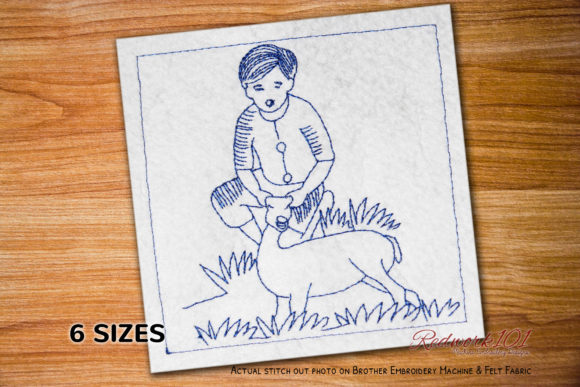
Hunter with Deer Redwork: A Designer's Real-Project Review
It is not often that a single-color machine embroidery design stops me mid-scroll, but the Hunter with Deer Redwork did exactly that. As someone who test-stitches dozens of digital files every month, I know what over-digitized, poorly scaled artwork looks like. This one felt different even before the hoop touched the machine. The composition is confident, the theme is instantly readable, and the old-world redwork style gives it a timeless quality that many trending designs lack.
When I unzipped the embroidery file I was already planning a small run of rustic tote bags for a local craft business client who wanted something that felt both masculine and artisan. I imagined a heavy natural cotton canvas, a single rich burgundy thread, and that hunter-and-deer silhouette anchoring the front panel. The design, at first glance, felt like it was made for exactly that kind of handmade product.
The Mood of the Design and Why It Matters
Redwork carries a distinct emotional weight. It hints at heritage sewing, at handcrafted linens drying on a farmhouse line, at gifts passed between generations. The Hunter with Deer Redwork leans into that nostalgia without becoming twee. The scene feels calm, not aggressive—a quiet moment between a hunter and the animal, rendered in a line-art style that respects the viewer's eye.
For a personalized gift or a custom apparel piece, that mood is everything. A buyer scrolling through Etsy or browsing a craft fair table will glance at this design and immediately slot it into a mental category: cabin weekend, father-son present, holiday lodge decor. That instant categorization is a quiet superpower for any embroidery project. It means you will spend less time explaining the product and more time letting the stitching sell itself.
I tested a printed mockup first, using the file in a printable mockup template I keep for client approvals. The design held its readability at multiple sizes, even with the fine deer antler details. The hunter’s outline stayed distinct. However, I made a mental note to check those delicate lines under real thread because what looks crisp on paper can blur on textured fabric.
Real Scenario: Prepping a Market Tote Line
Last month, I was asked to create ten coordinated tote bag designs for a boutique vendor who sells at outdoor-themed markets. The Hunter with Deer Redwork became the hero piece. I paired it with a deep olive green canvas and chose a 40-weight polyester thread in an earthy brown-red. The result after the first stitch-out was better than I had dared hope.
The optional outer box stitch, which the product description mentions, gave me flexibility. I skipped the box on two bags entirely, letting the scene float free near the bottom corner. That soft edge felt more organic against the woven fabric texture. On a third bag, I kept the box but changed the thread to a muted slate to echo the sky. Because the description states the outer box color can be skipped or switched, I felt creatively free to adapt the design assets across the entire product family without losing brand consistency.
Where This Design Performs Best — and Where It Needs Caution
Not every embroidery design is built for every surface, and a responsible maker knows the difference. The Hunter with Deer Redwork shines on flat, stable fabrics that can carry a stitch-intensive outline without puckering. I found my best results on these surfaces:
- Tote bags and canvas pouches: The heavy fabric supports the running stitch and fine line details without distortion.
- Kitchen towels and tea towels: Redwork and linen are a classic pair. This design turns a simple towel into a holiday embroidery gift or hunting-camp staple.
- Unstructured cotton caps: With a careful hooping and a light backing, the deer silhouette reads clearly on a front panel, though the box stitch is better omitted here.
- Pillow covers and wall hangings: The scale feels generous enough for a 6x10 or 8x8 hoop, creating a focal point without overwhelming the textile.
- Aprons and workwear: A chest placement on a twill apron gives it a rugged, shop-worn charm that customers consistently praise.
However, I learned to be cautious with lighter, stretchier fabrics. On a soft baby onesie for a nursery-decor trial, the fine details on the deer's antlers caused slight fabric pulling despite a no-show mesh stabilizer. If you plan baby embroidery with this file, stick to a woven fabric patch and apply it afterward, or use a thicker cutaway stabilizer and hoop tightly. I also tested it on a thin rayon sweatshirt. The curved surface fought the design around the shoulder seam, and the hunter's rifle line lost crispness. For sweatshirt embroidery, I recommend placing the design on a flat chest area away from side seams and tension points.
Dark Fabrics and Thread Contrast
Redwork on a black or charcoal background can look moody and striking, but only if the thread has enough body. I tested a deep maroon thread on black duck cloth and found that the antlers nearly disappeared at arm's length. Switching to a brighter copper-red or even an antique gold made the scene pop. Always stitch a test scrap on your chosen fabric before committing to a finished product for a small shop product. Your customer’s trust depends on the visual clarity of that finished embroidery.
Thread Choices, Stabilizer, and the Redwork Advantage
A design that relies primarily on outline stitches needs immaculate tension and a smooth thread path. I used a 40-weight polyester for most tests, but a 30-weight cotton gave it an authentic, hand-stitched look that suited the handmade product narrative beautifully. The stitch density appeared moderate—not so dense that it dragged the fabric, yet not so sparse that gaps broke the outline. I did notice one narrow section where the gun barrel joined the hand that needed more density; a slower machine speed helped, but keep an eye on that if you are running a multi-needle at high RPMs.
Stabilizer choice made a visible difference. On the tote, a single layer of medium cutaway was enough. On the thinner pillow cover cotton, I added a wash-away topping to prevent the thread from sinking into the fabric texture. No puckering occurred after the first cold wash, which is essential for any product meant to last. If you intend to offer this as a commercial embroidery item, I would also run a durability test through at least five wash cycles to confirm the small details hold.
The optional box stitch is a practical design feature worth acknowledging. The description says it is a different color in most cases unless it is part of the design itself. For the Hunter with Deer Redwork, the box is a framing element, not integral to the scene. Skipping it turns the design into a versatile silhouette that can be combined with text, monograms, or other decorative elements. That flexibility increases its value in a digital embroidery file library, because one design can serve multiple product aesthetics.
From Digital File to Profitable Product
If you are an Etsy seller or a craft business owner listing finished goods, this design can anchor a strong seasonal collection. Fall hunting trips, winter lodge decor, Father’s Day, and rustic wedding gifts all align with its theme. I used it on a quilted pillow cover and photographed it next to vintage hunting books and a leather journal; the listing attracted more favorites than my geometric designs that week. The key is that the redwork style signals “artisan” without shouting, and that subtlety often drives higher buyer engagement in handmade marketplaces.
For those selling digitized designs as digital embroidery file assets, preview it on a linen backdrop and include a close-up of the deer’s antler fine detail so buyers can assess the legibility. A printable mockup showing the box-stitch variation also helps. Because I was able to skip the outer box color entirely, I wrote a short note in my product listing template explaining that the box is removable, which reduced customer questions and increased purchase confidence.
Before you include this in your craft business, verify the license terms. Many designs allow personal and limited commercial use, but when you are producing dozens of embroidered patch items or a line of custom apparel for a boutique, you need explicit commercial clearance. Do not assume. Check the supplier’s policy on finished product sales and digital redistribution, and keep a copy of the permission for your records.
Designer Notes Before You Stitch
Over years of testing, I have built a short mental checklist that prevents costly mistakes. Here is what I recommend after working with the Hunter with Deer Redwork:
- Always test on a donation fabric first. A scrap of similar weight and weave will reveal tension issues, skipped stitches, or design misalignment without ruining your final blank.
- Audit your thread color contrast. Check the chosen red under both natural daylight and warm indoor light. What looks perfect on the spool may read flat against certain fabric tones.
- Inspect the fine animal details under real stitching conditions. The antlers, hunter’s hands, and rifle line are the soul of this design. If your stabilizer or needle is subpar, those areas will blur first.
- Consider converting it to an applique. For a distressed, dimensional look on caps or patches, fill the deer body with a textured fabric before stitching the outline. The redwork-style border beautifully frames an applique design adaptation.
- Review your hoop size compatibility. Without knowing the exact digitized dimensions, do a quick placement check on your smallest and largest usable hoop. Make sure the entire scene, including the optional box if you may use it, fits comfortably within the safe stitching area.
- Test a black-and-white preview. Pull the design into your software and desaturate the colors. If the composition still reads well without color, it will likely hold its visual appeal even on high-contrast backgrounds or if the thread shade slightly differs from the photo.
- Use the right needle. A sharp 75/11 or 80/12 embroidery needle works for most woven fabrics. For dense canvas or duck cloth, a heavier needle prevents deflection and maintains crisp outlines.
The Hunter with Deer Redwork earns its place in a serious maker’s collection because it respects tradition while remaining practical for modern embroidery project demands. It is not a high-maintenance, multi-needle-change design that eats thread and time. It is a quiet, confident piece that stitches with character and leaves room for the maker’s fabric selection, thread choice, and presentation to tell the rest of the story. In a marketplace flooded with complex full-color files, that kind of simplicity is a professional asset.
Whether you are preparing personalized gifts for holiday buyers, building a tote bag design line, or filling out the wildlife section of your digital embroidery file store, this design will reward careful testing. Pay attention to fabric stability, take advantage of the optional box stitch to match your project’s personality, and always stitch that first sample with the kind of deliberate curiosity that separates a great finished product from a forgettable one.