Tanker Ship Bluework: A Designer's Embroidery Review
First Impressions and Visual Personality
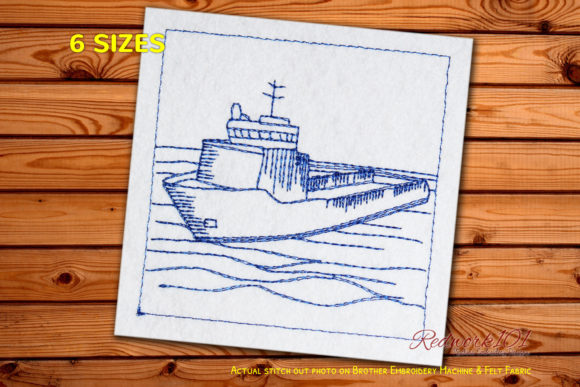
When I first opened the Tanker Ship Bluework design file, the immediate reaction was that this piece carries a quiet, workmanlike confidence. It does not try to impress with flashy details or overly complex linework. Instead, it leans into a classic, almost heritage aesthetic that many small business owners are actively searching for right now. The tanker ship silhouette reads clearly, and the bluework approach gives it a denim-friendly, maritime-inspired character that feels both familiar and premium at the same time.
From a branding perspective, this design sits comfortably between rustic and modern. It would not look out of place on a craft brewery apron, a coastal café cap, or a handmade leather tote. The optional box stitch mentioned in the description adds another layer of versatility. Some businesses will want the framed, badge-like finish for embroidered patches. Others may prefer the open silhouette for a cleaner, more organic placement on a shirt chest or sleeve. That choice alone makes Tanker Ship Bluework more flexible than many single-use designs in the Transportation category of embroidery files.
One thing I always look for as an embroidery designer is whether the artwork tells a story without words. This tanker ship does exactly that. It speaks of movement, trade, travel, and quiet strength. For a small business trying to build visual consistency across products, having a design that carries this much implied narrative is invaluable. It gives customers something to feel, not just something to see.
Embroidered Patches as Brand Assets
Patches are having a major moment in small business merch right now, and Tanker Ship Bluework is practically built for this format. The defined outer edges make it easy to finish as a standalone patch with merrowed borders or satin-stitch edging. I can easily picture this sitting on a denim jacket back panel, sewn onto a canvas tote, or even heat-pressed onto a cap. For Etsy sellers and handmade brands, offering a custom embroidered patch as a sticker alternative or a hang tag accent can dramatically increase the perceived value of a product.
What makes this design particularly effective as a patch is its proportions. The ship silhouette is balanced enough to hold its shape at smaller sizes, which is critical when creating a patch that needs to fit on a chest pocket or a beanie cuff. The optional box stitch gives business owners a ready-made frame that mimics the look of a woven label, lending a boutique feel to any item it touches.
From a production standpoint, producing patches with Tanker Ship Bluework is straightforward. The design avoids overly fine details that tend to get lost in dense thread. The ship hull, superstructure, and waterline are distinct enough to stitch cleanly even at compact dimensions. If you are a small business owner considering patches for the first time, this is the kind of forgiving design you want to start with.
Uniform and Apparel Applications
Staff uniforms benefit enormously from subtle, professional embroidery that reinforces brand identity without screaming for attention. A tanker ship motif might seem niche, but its application is surprisingly broad. Coastal restaurants, fisheries, dockside cafés, marine supply shops, waterfront hotels, and even eco-tourism operators can all adopt Tanker Ship Bluework as a unifying visual on polo shirts, work shirts, and aprons.
I recommend placing this design as a left chest embroidery on button-up work shirts and polos. At roughly three to four inches wide, it holds enough detail to be recognizable while staying modest enough for customer-facing staff. On aprons, a slightly larger placement near the bib or centered on the waist panel creates a polished, intentional look. The bluework palette reads as calm and trustworthy, traits that translate directly into customer trust when patrons see consistent branding across your team.
For cap embroidery, the design needs a bit of consideration. Curved cap fronts can distort shapes if the design is too wide or has horizontal elements near the edges. Tanker Ship Bluework benefits from its vertical orientation. The ship stacks and mast naturally draw the eye upward, which helps the design sit comfortably on the front panel of a structured cap. This makes it a strong candidate for trucker hats, dad caps, and five-panel styles that are popular in small business merch lines today.
Tote Bags, Aprons, and Boutique Merchandise
Tote bags remain one of the highest-ROI items for small businesses investing in custom embroidery. They are affordable to produce, easy to sell, and offer a large printable area that lets a design breathe. Tanker Ship Bluework on a natural canvas tote bag creates an instant association with craftsmanship and coastal living. Pair it with your business name underneath, and you have a walking billboard that customers actually enjoy carrying.
For bakeries, florists, and handmade studios, adding this design to linen aprons or fabric wrap packaging elevates the entire unboxing experience. I have seen small creative studios use embroidered patches as product packaging accents, stitched onto muslin bags or tied with twine around a candle or soap bundle. The tanker ship motif fits that aesthetic perfectly, blending with the handmade movement that values texture, simplicity, and storytelling through physical objects.
Sizing, Hoop Selection, and Fabric Challenges
Before committing to a production run, every embroidery designer knows the importance of testing. The description notes that the outer box color is a different color in most designs and can be skipped, which is a helpful detail. It tells me the design is layered thoughtfully, with the box stitch being a separate element rather than baked into the core artwork. This modularity is excellent for adjusting the final look based on the garment color or the desired finish.
Hoop size is one of the first things you should confirm after purchasing this embroidery file. If you plan to stitch the full design including the optional box, you will need a hoop large enough to accommodate the outer dimensions comfortably. For smaller hoop setups common in home-based embroidery businesses, skipping the box stitch may be the practical choice. Always check the design file details before loading it into your machine.
Fabric texture matters significantly with designs like Tanker Ship Bluework. The bluework concept relies on thread density and stitch direction to create visual interest without multiple colors. On smooth, tightly woven fabrics like twill or poplin, the stitches will lay beautifully and show crisp edges. On textured fabrics like piqué knit used in polo shirts or heavy canvas on tote bags, you may need a topper or additional stabilizer to prevent stitches from sinking into the fabric nap. Testing on a fabric swatch similar to your final product is non-negotiable here.
Thread Colors and Stitch Density
Bluework, by nature, is a study in tonal variation. The design description suggests the outer box may appear in a different color, which gives you creative control. For a unified look, you could match the box thread to the tanker ship body. For contrast, a lighter or darker blue on the frame creates a border that helps the patch stand out on dark uniforms. I always test thread color choices under different lighting before approving a final combination. What looks balanced on screen can feel stark or washed out once stitched onto fabric.
Stitch density in the Transportation category of embroidery designs can vary widely. Designs meant for patches tend to be denser to achieve that solid, almost rigid feel. Designs meant for direct garment embroidery benefit from slightly lower density to maintain fabric drape and comfort. Without knowing the exact stitch count, I would still expect Tanker Ship Bluework to perform well on medium-weight fabrics with a cutaway stabilizer for garments and a tearaway option for patches that will be removed from backing.
Design Testing Before Production
My workflow for evaluating any machine embroidery design before business use follows a standard checklist that I recommend to every small business owner and apparel decorator. Start by stitching the design in black and white on a scrap of the exact fabric you plan to use. This reveals any spacing issues, overlapping elements, or registration problems that thread color can mask. Next, test the design at the smallest size you intend to offer. If it holds up as a two-inch patch, it will look even better at four inches.
Create a printable mockup before ordering thread or cutting fabric. A digital embroidery file placed onto a product photo helps clients visualize the finished product and makes approvals faster. Compare Tanker Ship Bluework beside other design assets in your branding toolkit. Does the style match your existing logo? Does the proportion feel right next to your typography? These comparisons prevent costly production runs that result in mismatched merchandise.
Finally, confirm commercial licensing before using the design for business purposes. The description does not explicitly detail usage rights, so reaching out to the seller or checking the product terms is a responsible step. Most digital embroidery files intended for commercial embroidery are clearly labeled, but you never want to assume, especially when the finished product will represent a brand identity.
Brand Identity and Customer Trust
The psychological effect of consistent embroidery on customer perception is well documented in the retail world. When a customer sees a thoughtfully placed embroidered patch on a staff apron, a tote bag, or a cap, they unconsciously assign higher value to everything that business offers. Tanker Ship Bluework supports this effect. Its clean lines and purposeful composition communicate that the business cares about details. That perception directly influences buying decisions, repeat visits, and word-of-mouth referrals.
For Etsy sellers and handmade product creators, embroidery serves as a signature. It is harder to replicate than a printed label and feels more intentional. Stitching Tanker Ship Bluework onto a canvas pouch that holds a handmade candle or a bag of artisan coffee turns a simple container into a keepsake. Customers keep those pouches and bags long after the original product is gone, extending brand visibility far beyond a single transaction.
Commercial Use and Final Recommendations
As an embroidery designer who regularly consults with small businesses on their merch strategy, I see Tanker Ship Bluework as a solid addition to a commercial embroidery library. It is visually distinct enough to be memorable, yet generic enough to suit a wide range of industries beyond maritime themes. Logistics companies, vintage goods shops, outdoor outfitters, and travel brands can all find a narrative connection to this design without stretching credulity.
For craft businesses and boutique merchandise lines, the bluework style offers a handmade product feel that customers gravitate toward. It reads as authentic rather than mass-produced, which supports premium pricing and buyer engagement. When you pair the design with quality thread, proper stabilizer, and thoughtful placement, the finished product speaks for itself.
Ultimately, Tanker Ship Bluework earns its place in a professional embroidery lineup. Test it thoroughly, experiment with and without the box stitch, and match the thread selection to your brand palette. Whether stitched onto custom apparel, turned into an embroidered patch, or used as a subtle detail on customer gifts and event merch, this design has the versatility and personality to perform in real business settings.