Happy Girl Redwork: A Designer's Sweatshirt Review
When I first opened the Happy Girl Redwork embroidery file, I immediately felt that warm, nostalgic pull that only redwork can deliver. There is something timeless about single-color stitching—it speaks quietly but confidently. For the boutique sweatshirt collection I am currently designing, this piece stopped me mid-scroll. The name suggests sweetness, but the redwork tradition gives it an artisanal weight that feels far more elevated than a typical cute motif.
What I am looking for in a machine embroidery design destined for a limited sweatshirt drop is simple: does it feel intentional, does it stitch clean, and will it photograph beautifully on a real body. Happy Girl Redwork checks those boxes early. The optional box stitch mentioned in the description is a detail I appreciate—it gives me creative control. Some custom apparel projects need that framing element for structure, while oversized hoodies often look better with the design floating freely on the chest.
The First Stitch Impression of Happy Girl Redwork
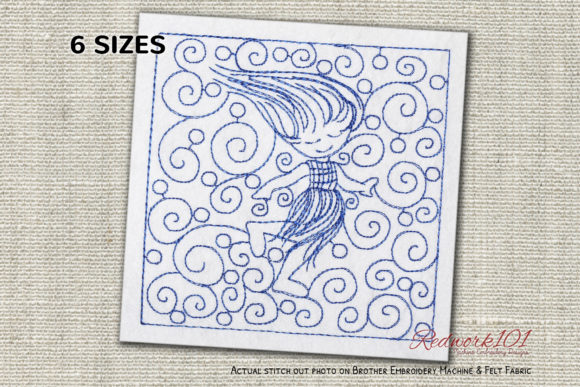
Redwork carries history. It reminds people of heirloom linens, slow stitching, and handmade care. That emotional layer is exactly what a boutique brand wants to communicate before a customer even reads the product description. The design mood here reads as playful yet refined, with a vintage sweetness that does not tip into childish territory. This is not a cartoon. It is a stylised portrait framed by the warmth of monochrome threadwork, and that positioning matters enormously for pricing and audience.
Visually, I imagine Happy Girl Redwork stitched in a deep brick red on a creamy oatmeal sweatshirt—the contrast would be soft but readable. On dark fabric, a brighter crimson or even a dusty rose could give enough pop without losing the redwork character. The optional outer box color being different across designs tells me the digitizer has considered versatility. If the box is not integral to the artwork, skipping it entirely for a more minimal chest placement on a pastel pink hoodie could look incredibly editorial.
Placement Possibilities for Sweatshirt Projects
Chest placement remains the strongest option for sweatshirt embroidery with this type of design. Centered at roughly 9 to 11 centimetres wide, Happy Girl Redwork would sit perfectly on a crewneck or a zip-through hoodie without overwhelming the garment. For a more fashion-forward approach, I am considering a slightly off-centre placement on an oversized pullover—high enough that the design hits just below the collarbone on a dropped-shoulder silhouette.
Sleeve accents are another possibility. If the design scales down cleanly, a smaller version on the left sleeve of a colour-blocked sweatshirt could become a subtle signature detail. For back designs, I would want to test the maximum size the hoop size can accommodate; a large-scale Happy Girl Redwork centred between the shoulder blades on a boxy hoodie could feel like wearable art. The optional box stitch would make sense here, providing a visual boundary that frames the larger composition beautifully.
Stitch Quality and Production Practicalities
Before committing any digital embroidery file to a full production run, I always run a test stitch on the actual fabric I plan to use. With redwork, stitch density becomes a conversation point. Too dense, and the design will feel stiff on fleece-backed sweatshirt material and potentially pucker after washing. Too light, and the definition suffers. The best redwork designs balance fill stitches with thoughtful negative space, and from the preview visuals, Happy Girl Redwork leans into that strategic openness.
Thread color contrast is the make-or-break variable here. On a white or natural cotton sweatshirt, a true Turkey red thread creates that classic redwork effect instantly. On heather grey or charcoal, I would test both a bright poppy red and a softer terracotta to see which one maintains the friendly, approachable personality of the design without becoming harsh. The description hints that the outer box often uses a different color—this suggests the design is embroidery file-ready for multi-needle machines with automatic color changes, which speeds up production significantly for a small shop product environment.
Fabric Compatibility and Stabilizer Choices
Sweatshirt knit is forgiving but not effortless. Fleece-backed French terry can be plush and cooperative with the right stabilizer, while loopback cotton sometimes needs a topper to prevent stitches from sinking into the nap. For Happy Girl Redwork, I would default to a medium-weight cutaway stabilizer and add a water-soluble topping on anything with visible surface texture. The design's linear style should not create excessive pull, which means fewer tension headaches during a thirty-unit run at midnight.
Fabric thickness is another consideration. Heavyweight 400gsm sweatshirts are trending, but the embroidery surface is less uniform than a tightly woven base. I would test on both a midweight organic cotton and a heavier brushed-back fleece to confirm the small-size readability holds up across substrates. Details like facial features or fine linework within the redwork illustration need enough clearance between stitch lines to survive the plush sink of a thick fabric without blurring into each other.
Brand Identity and Customer Perception
When I price a boutique sweatshirt at a premium, the embroidery needs to telegraph that value instantly. Happy Girl Redwork achieves this through the perceived craft of redwork itself—customers associate single-color detailed stitching with quality, patience, and handmade product authenticity, even when it is produced on a commercial machine. This perception directly supports buyer trust and makes the garment feel less like a commodity and more like a curated piece.
For an Etsy seller or small shop product owner, the storytelling around the design becomes a powerful listing asset. You can talk about the heritage of redwork embroidery, the choice of thread shade, the optional box detail that lets the buyer choose between framed and floating versions. These decision points make the product page richer and answer the unspoken question every shopper has: why is this worth the price.
Color Palette Suggestions for Sweatshirt Drops
After testing the design visually against my studio colour wall, I have mapped out the strongest sweatshirt bases for a cohesive seasonal drop using Happy Girl Redwork:
- Oatmeal or Natural Cotton: The purest redwork expression. High contrast, heritage feel, photographs beautifully in flat lays.
- Dusty Blush or Rose: A tonal approach. The red thread blends softly into a pink base, creating a subtle embossed effect that feels very elevated.
- Slate Grey or Charcoal: Modern and slightly edgy. A brighter red thread pops dramatically and appeals to customers who want the design without the sweetness.
- Soft Sage or Eucalyptus Green: Unexpected and fresh. Red on green is a complementary pairing that feels current and works well for nature-inspired branding.
- Cream or Off-White: The safest commercial choice. Clean, classic, and the easiest backdrop for consistent production photography.
Practical Testing Before Full Production
I cannot stress enough the importance of running a proper wash test before listing anything with machine embroidery on it. I put every test sweatshirt through three cold wash cycles and a low tumble dry to observe thread behaviour. Red thread on light fabric carries a slight risk of color bleeding, so I pre-wash all garment blanks and use high-quality polyester embroidery thread with proven colorfastness. The stitch density of Happy Girl Redwork looks balanced enough to avoid the dreaded stiff patch feel, but I will always verify with a wear test—putting a sample on a real human for a full day to check for comfort and drape.
Small details within the design deserve special attention. If the face or any fine interior linework collapses at smaller sizes, I would either increase the minimum stitch length in my embroidery software or commit to using this design only at a scale where every element breathes. The optional box stitch also gives me a convenient fallback: if the outer frame fights with a particular garment colour, I simply skip that color stop and let the central illustration stand alone.
Etsy Listings, Mockups, and Marketing Angles
For sellers preparing Etsy seller listings or social media content, Happy Girl Redwork photographs like a dream against simple backgrounds. I recommend shooting the finished sweatshirt in natural window light with a few lifestyle props—a vintage book, a ceramic mug, a spool of red thread—to reinforce the redwork narrative. The design's name itself is SEO-friendly and emotionally resonant: Happy Girl Redwork suggests joy, craftsmanship, and a specific artistic style, all in three words.
When creating printable mockup previews or digital product imagery, ensure the thread texture reads clearly. Flat digital previews that look too smooth can under-sell the tactile appeal of real embroidery. If your mockup tools allow for slight texture overlays or thread sheen effects, use them sparingly to communicate what the finished product actually feels like. Customers buying embroidered apparel are purchasing texture as much as imagery.
The Boys category placement is interesting. While the design name suggests a feminine character, redwork as a technique is entirely gender-neutral. A unisex oversized sweatshirt featuring Happy Girl Redwork could appeal to anyone who appreciates vintage textile art. I would not hesitate to list this across multiple demographics and let the styling guide the customer. Pair it with relaxed denim and canvas sneakers in product photos, and the design will find its audience naturally.
Final Designer Verdict on Happy Girl Redwork
After working through placement options, fabric pairings, color testing, and the practical realities of commercial embroidery production, Happy Girl Redwork earns a confident place in my boutique sweatshirt lineup. It delivers the heritage warmth of traditional redwork while remaining adaptable enough for modern streetwear silhouettes. The optional box detail is a genuine creative asset, not an afterthought, and the ability to skip that outer color opens up layout flexibility that many embroidery designs do not offer.
The design reads as decorative, warm, playful, and handmade without losing the polish required for premium pricing. It stitches with personality. It photographs with soul. And on a well-chosen sweatshirt blank, it transforms a basic garment into something that feels curated and intentional—exactly the result every boutique brand and independent apparel decorator is chasing. Before ordering, I will confirm the exact dimensions, hoop size requirements, and recommended stitch count directly with the supplier, as well as ensure the embroidery file format is compatible with my multi-needle machine setup. Test stitch first, trust second—always.